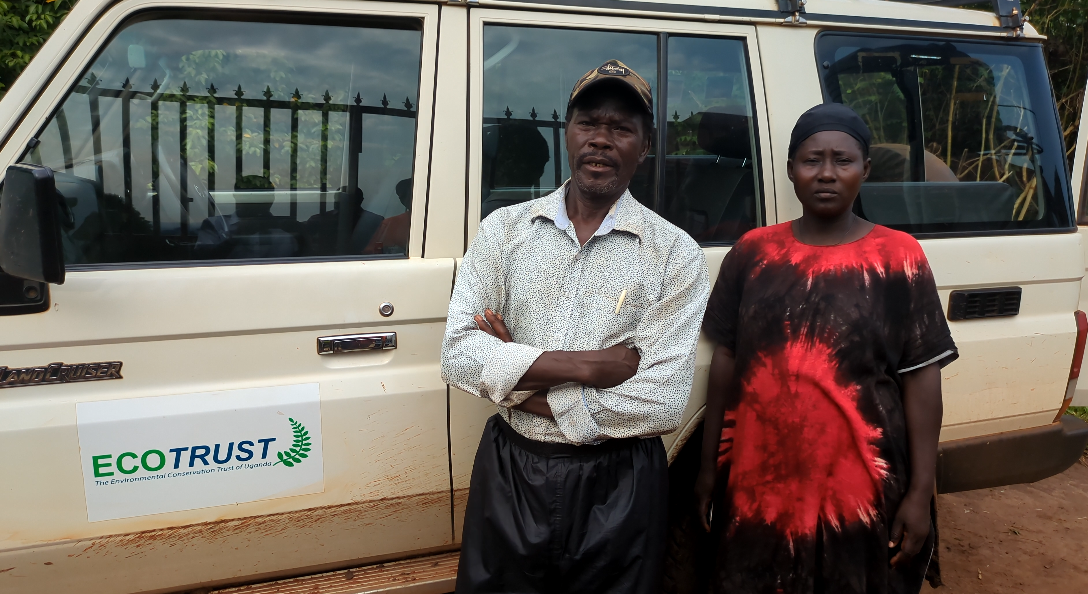
The Transformative Approach to Sustainable Landscapes and Livelihoods (TASLL) in Northern Uganda project, implemented by ECOTRUST with funding from the UK International Development and other partners is proving that protecting the environment can be transformed into a highly profitable, self-sustaining agribusiness.
As the project comes to a close, thousands of businesses and farmers will continue to benefit from the support provided by the project.
As the project comes to a close, thousands of businesses and farmers will continue to benefit from the support provided by the project.
The TASLL Northern Uganda project targeted the critical conservation of over 65,548 hectares of natural forest in the Agoro-Agu landscape, an area in the Acholi East sub-region spanning the Lamwo, Pader, Kitgum, and Agago districts.
To combat local deforestation, the project set out to sustainably reforest 15,000 hectares by planting 6 million native trees, intentionally extending these restoration efforts into refugee-hosting communities.
By combining technical capacity building, quality tree seedlings and direct market links, the project has fundamentally shifted the economic realities for smallholder farmers.
Local groups and independent entrepreneurs have been trained to run green businesses e.g sustainable tree nurseries, Beekeeping enterprise, and Shea butter production and allowing them to grow financially while creating jobs for their neighbors.
Local groups and independent entrepreneurs have been trained to run green businesses e.g sustainable tree nurseries, Beekeeping enterprise, and Shea butter production and allowing them to grow financially while creating jobs for their neighbors.
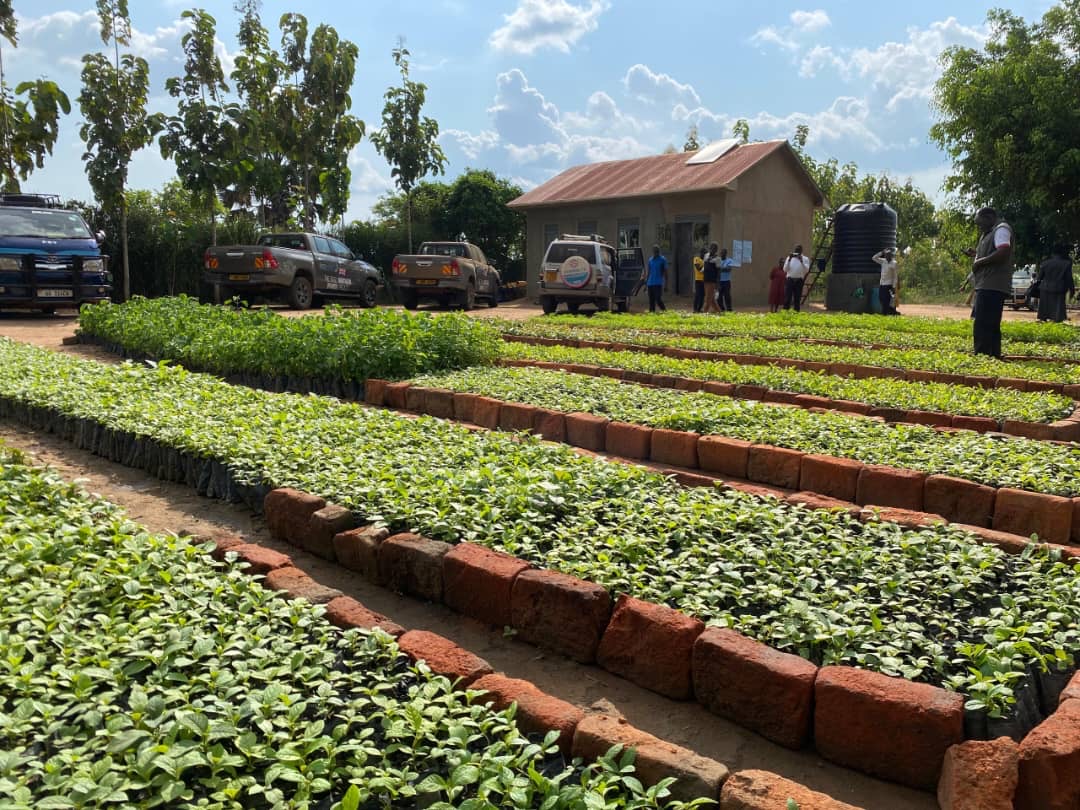
For Kidega Moses, a resident of Labong Akwangparish in Kitgum, the project was exactly what he needed to grow his business.
“I already had a passion of raising seedlings, but I lacked technical knowledge to scale up,” says Kidega. ECOTRUST stepped in at the perfect time to bridge the gap. Through their support and training at Namanve Seed Centre, I was able to get access to quality seeds and which helped me scale up my business. Today, knowing that my nursery has directly contributed to the thousands of trees planted in our community is proof that landscape restoration can be a powerful business.”
Today, Kidega has been able to grow his business, acquire technical knowledge, employ 2 permanent workers and over 10 parttime workersto support with the nursery.
He has earned over 25 million Ugandan shillings from the 51,000 seedlings sold in 2025 & 2026, and has plans to scale up.
While planting commercial or indigenous woodlots offers immense long-term financial security, with returns after over 20 years, small holder farmers face immediate daily economic pressures. To address this, long-term environmental equity is combined with short-term livelihood components.With this, the project ensures that rural families maintain financial resilience throughout the lifecycle of their woodlots.
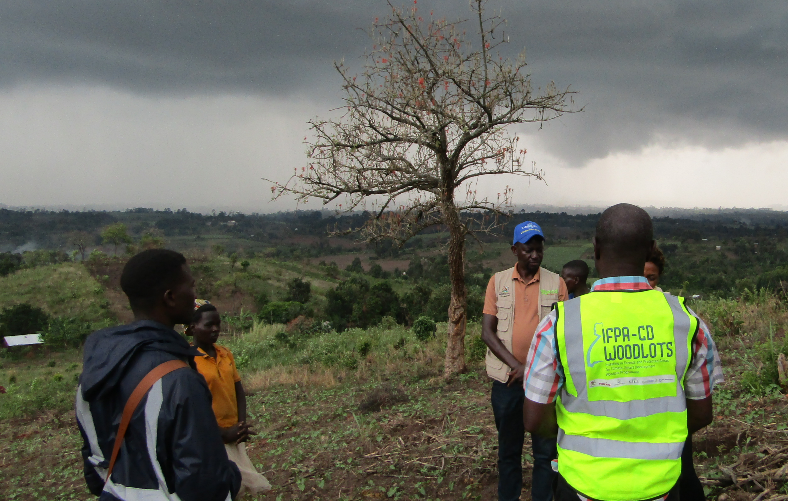
Ogaba Sisto, a 52-year-old is one of the 97 farmers who planted trees under the TASLL project in Lugwar Paris, Labong AkwangSubcounty in Kitgum district. Under the program, he planted 600 trees of Tectona commonly known as black tick, which he integrated with cassava, millet, groundnuts, maize, simsim. For farmers like Sisto, the planted crops provide income to sustain their livelihood as they wait for the trees to grow and benefit from them later on in life.
“I have to admit, before today, I didn’t have a single stem of a tree planted under my name,” says Bosco Oket Yot, the LC3 LabongKwang. But after visiting the field and seeing what farmers like Sisto & Moses are achieving, especially about the sale of 51,000 seedlings, something shifted my mind. I have been inspired. I am now declaring that I am going to become a tree farmer myself. I want to challenge all other leaders and stakeholders here today to lead by example and start planting trees in our communities.”
During a visit to the beneficiaries, Among Catherine, the Assistant CAO Pader District stressed about the importance of integration of projects.
“The success we are seeing on the ground is a testimony to a strong partnership, but the challenge for us as leaders now is to ensure integration,’ Among says. We need to actively connect these farmers to initiatives like PDM and micro-scale irrigation. If a maize farmer can irrigate both their food crops and their trees, we ensure year-round productivity. Integration is the ultimate key to chasing poverty out of our households and achieving sustainable development.”
“We are suffering because of our own actions,” says William Komaketch, the Resident District Commissioner (RDC) of Lamwo district, one of the districts in which the project is implemented. 40% of our rain is generated locally from trees, lakes, and swamps, but we have destroyed them, and now the weather is failing us. Planting trees is an excellent long-term goal, but a farmer cannot keep a tree while waiting 25 or 30 years for it to mature. If we want to move our people to prosperity, conservation must be paired with immediate livelihood components.”
As key implementing partners of the project, ECOTRUST laid out plans to sustainably boost livelihoods of the farmers even further.
“We are planning to construct a Beekeeping center of excellence in Pader, and honey collection centers in Lamwo and Agago districts, says Gerald Kairu, the Head of Programs at ECOTRUST. The intention is to support people to improve their livelihoods.”
By demonstrating that landscape restoration can be managed as a highly structured, profitable business, the TASLL project aimed at more than just planting trees. It is building a self-reliant group of rural green entrepreneurs who are proving that environmental stewardship and economic prosperity go hand in hand.